
Introduction to PPV
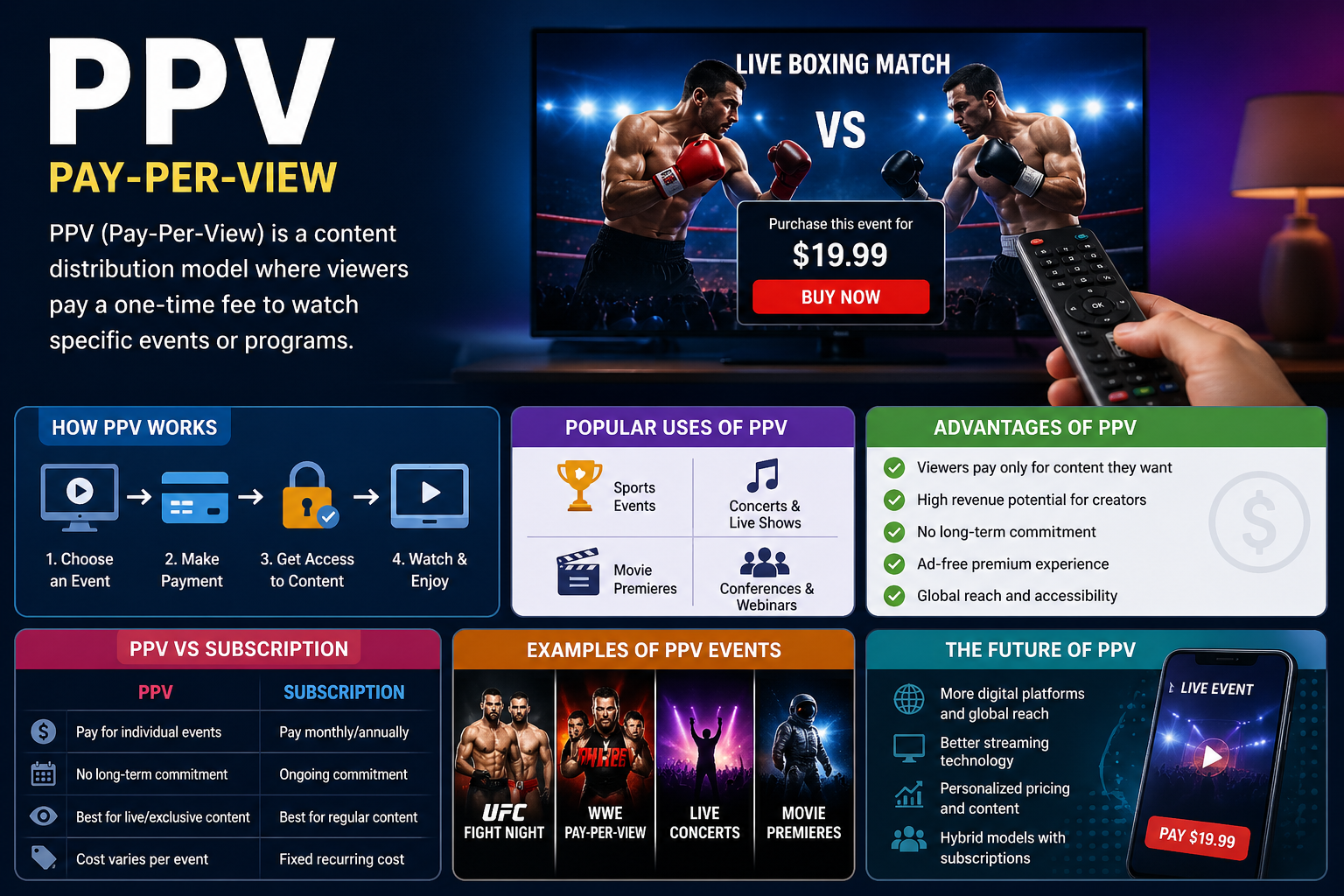
PPV, or pay-per-view, is a content monetization model that allows viewers to pay a one-time fee to access a specific piece of content, usually a live or exclusive event. Unlike subscription services that charge recurring fees, PPV gives users the freedom to pay only for what they want to watch. This makes it one of the most flexible and targeted ways to consume premium content.
From blockbuster boxing matches to global concerts and virtual business conferences, PPV has become a powerful tool in the digital age. Its relevance has only grown with the rise of streaming platforms, where creators and organizations can reach global audiences without relying on traditional broadcasters.
This article provides a comprehensive, expert-level understanding of PPV—how it works, where it’s used, its advantages and limitations, and its future in a rapidly evolving media landscape.
What Is PPV?

PPV stands for pay-per-view, a system where users purchase access to a specific event or piece of content instead of subscribing to a full service. The content is typically available for a limited time, often live or within a short replay window.
Core Features of PPV
- One-time payment per event or program
- No ongoing subscription required
- Limited-time or exclusive access
- Often associated with live or premium content
- Typically delivered without ads
This model is designed for high-value, high-demand content where viewers are willing to pay for immediate or exclusive access.
How PPV Works
The PPV model is straightforward, but its simplicity is what makes it so effective.
Step-by-Step Process
Content Selection
Users choose an event or piece of content they want to watch, such as a live sports match or online seminar.
Payment
A fixed price is displayed, and the user pays using a digital payment method.
Access Granted
After payment, access is unlocked through a streaming platform, app, or broadcast channel.
Viewing Period
The content is available either live or for a limited replay duration, depending on the provider.
This system allows content providers to generate revenue directly from each viewer while giving users complete control over their spending.
The Evolution of PPV
Early Cable Television Era
PPV first gained popularity through cable television. Viewers would purchase access to special events like boxing matches or movie premieres using their remote controls or by calling their service provider.
This model introduced the idea of premium, event-based content, which laid the foundation for modern PPV.
Digital Transformation
With the rise of the internet, PPV expanded beyond television:
- Streaming platforms enabled global access
- Mobile devices made viewing more convenient
- Online payments simplified transactions
- Content variety increased significantly
Today, PPV is a key component of the digital streaming ecosystem, used by both major corporations and independent creators.
Types of PPV Content
PPV is widely used across multiple industries, especially where exclusivity and timing are critical.
Sports Events
Sports dominate the PPV landscape. Major events such as:
- Boxing championship fights
- Mixed martial arts events
- Wrestling showcases
These events attract millions of viewers who are willing to pay for live access.
Entertainment and Concerts
Musicians and entertainers use PPV to broadcast:
- Live concerts
- Comedy specials
- Award shows
This allows fans worldwide to experience events without being physically present.
Film Releases
Some movies and special premieres are offered through PPV, particularly when exclusivity is part of the appeal.
Educational and Professional Events
PPV has expanded into professional spaces, including:
- Online courses
- Virtual conferences
- Industry workshops
This has opened new revenue streams for educators and experts.
Advantages of PPV
Freedom of Choice
PPV gives users complete control. They only pay for the content they actually want to watch, avoiding unnecessary costs.
High Revenue Potential
For content creators, PPV offers direct monetization. A single successful event can generate significant income in a short period.
Exclusive Content
PPV often includes content that is not available elsewhere, increasing its perceived value.
No Long-Term Commitment
Users are not tied to subscriptions, making PPV appealing for occasional viewers.
Premium Viewing Experience
Most PPV content is ad-free, offering uninterrupted viewing.
Disadvantages of PPV
Cost Can Add Up
While a single PPV purchase may seem reasonable, frequent purchases can become expensive over time.
Limited Access Window
Content is usually available for a short period, which can be inconvenient for viewers with busy schedules.
Not Ideal for All Content
PPV works best for high-demand events. Regular or low-interest content may not perform well under this model.
Competition from Subscriptions
Subscription platforms offer large content libraries at a fixed cost, making them more appealing for regular viewers.
PPV vs Subscription Models
Understanding the difference between PPV and subscription-based services helps clarify their respective strengths.
PPV Model
- Pay only for individual events
- No recurring fees
- Best for exclusive or live content
Subscription Model
- Monthly or yearly payment
- Access to a wide content library
- Ideal for continuous entertainment
Both models coexist because they serve different user needs. PPV is best for special events, while subscriptions are better for daily viewing.
Real-World Applications of PPV
Sports Industry
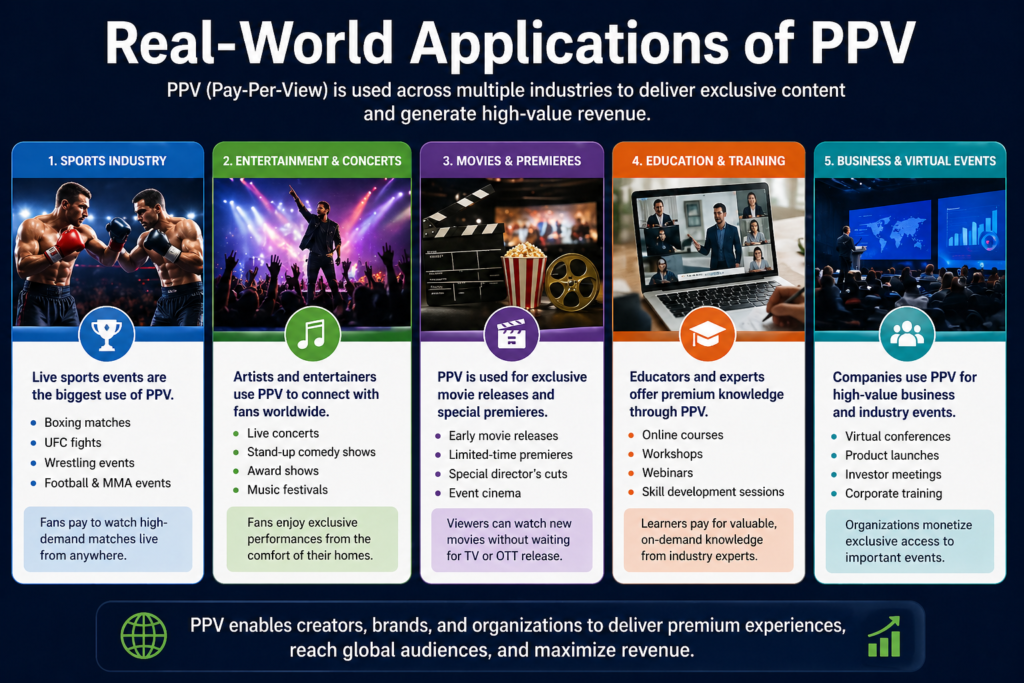
PPV is a major revenue driver in sports. High-profile matches can generate millions in sales, making it one of the most profitable models in the industry.
Entertainment Sector
Artists and performers use PPV to monetize live performances, especially when touring is limited or global reach is desired.
Digital Creators
Independent creators now use PPV to offer premium content directly to their audience. This includes:
- Exclusive live streams
- Specialized training sessions
- Behind-the-scenes access
This has made PPV more accessible than ever.
The Future of PPV
The PPV model continues to evolve alongside technological advancements.
Hybrid Monetization Models
Many platforms now combine PPV with subscriptions, offering both free content and premium paid events.
Global Expansion
Improved internet access has made it possible for PPV events to reach audiences worldwide instantly.
Personalization
Data analytics allows providers to tailor content and pricing strategies to specific audiences, increasing engagement and revenue.
Continued Relevance
Despite competition from subscription services, PPV remains strong in areas like live sports, exclusive releases, and niche content markets.
Best Practices for PPV Success
Offer High-Value Content
PPV works best when the content is unique, exclusive, or time-sensitive.
Price Strategically
Pricing should reflect the value of the content while remaining accessible to the target audience.
Build Anticipation
Effective marketing and promotion are essential for driving purchases.
Ensure Technical Quality
A smooth and reliable streaming experience is critical for maintaining viewer satisfaction and trust.
FAQ About PPV
What is PPV?
PPV stands for pay-per-view, a system where users pay to watch individual content or events instead of subscribing to a service.
Is PPV still relevant today?
Yes, PPV remains highly relevant, especially for live sports, concerts, and exclusive digital events.
How does PPV differ from streaming subscriptions?
PPV charges per event, while subscriptions provide access to a content library for a recurring fee.
Can PPV content be watched later?
In most cases, PPV content can be replayed, but only within a limited time window.
Who uses PPV?
PPV is used by sports organizations, entertainers, filmmakers, educators, and digital creators.
Conclusion
PPV continues to be a powerful and flexible content monetization model in the digital age. By allowing users to pay only for what they want, it offers a level of control and convenience that subscription services cannot always match.
For creators and businesses, PPV provides a direct and scalable revenue stream, especially for high-value, time-sensitive content. For viewers, it delivers exclusive experiences without long-term commitments.
As technology continues to evolve, PPV is likely to remain a key player in the global content economy—adapting, expanding, and delivering premium experiences to audiences worldwide.